Events, Lectures, News
Walter Benn Michaels
(University of Illinois, Chicago)
May 7, 2019
10 a.m.-12 noon, Philosophicum I, P109a
“The differentiation between left and right neoliberalism doesn’t really undermine the way it which it is deeply unified in its commitment to competitive markets and to the state’s role in maintaining competitive markets. For me the distinction is that ‘left neoliberals’ are people who don’t understand themselves as neoliberals. They think that their commitments to anti-racism, to anti-sexism, to anti-homophobia constitute a critique of neoliberalism. But if you look at the history of the idea of neoliberalism you can see fairly quickly that neoliberalism arises as a kind of commitment precisely to those things.” (Walter Benn Michaels)
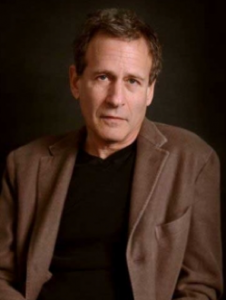
Walter Benn Michaels is a Professor of American Literature and Literary Theory at the University of Illinois, Chicago. Michaels’s work has generated a set of arguments and questions around a host of issues that are central to literary studies: problems of culture and race, identities national and personal, the difference between memory and history, disagreement and difference, and meaning and intention in interpretation. He earned his Ph.D. in 1975 from the University of California, Santa Barbara. Michaels also taught at the Johns Hopkins University and the University of California, Berkeley.
You can download the poster for the event here.
Events, Lectures, News
Jeffrey Herlihy-Mera
(University of Puerto Rico at Mayaguez)
April 30, 2019
10 a.m.-12 noon, Philosophicum I, P109a
This talk is based on the monograph After American Studies, a timely critique of national and transnational approaches to community, and their forms of belonging and trans/patriotisms. Using reports in multicultural psychology and cultural neuroscience to interpret an array of cultural forms—including literature, art, film, advertising, search engines, urban planning, museum artifacts, visa policy, public education, and ostensibly non-state media—the argument fills a gap in contemporary criticism by a focus on what makes cultural canons symbolically effective (or not) for an individual exposed to them. The talk will address the limits of transnationalism as a paradigm, evidencing how such approaches often reiterate presumptive and essentialized notions of identity that function as new dimensions of exceptionalism.

Jeffrey Herlihy-Mera is a distinguished researcher and associate professor in the Department of Humanities at the University of Puerto Rico at Mayaguez. He earned his Ph.D. in “Art, Literature, and Thought” from the Universidad Pompeu Fabra in Barcelona. This semester he is Fulbright Distinguished Chair of American Studies at Eötvös Loránd University in Budapest.
You can download the poster for the event here.
Events, Lectures, News
Bertrand van Ruymbeke (Université Paris 8)
May 15, 2019
10 a.m.-12 noon, N3 (Muschel)
How did the image of the New World evolve in France from the end of the Seven Years’ War in 1763 to the French Revolution in 1789? What was the intellectual and constitutional impact of the American revolution on pre-revolutionary French society? An original way to answer these two related questions is to look at prize-winning contests (concours) offered by the Académies. These contests were immensely popular in eighteenth-century France as several hundreds were organized, drawing thousands of memoirs over the course of the century. These essay contests bore on a wide range of topics in science, agriculture, history, law, medicine, commerce, gambling, fashion, and geography, as well as a myriad of regional issues, but also on the Atlantic World, slavery, the European «discovery» of the New World, the American revolution, colonization, and trade, particularly in the Académies of Pau, Lyon, Marseille, Toulouse, and Paris. Eloges competitions on major figures, historical or contemporaneous, related to New Worlds, such as Columbus, Franklin, Vergennes or Cook, were also held in the Académies of Marseille, Amiens, Cap François (on the island of Saint-Domingue), and Paris. Memoirs submitted to these contests, along with pamphlets, press articles, travel accounts, compilations of translated State Constitutions, and history books published on the American Revolution, offer a privileged view into a French—and to some extent European—collective reflection on the colonization of the New World and the birth of the American republic.
Bertrand van Ruymbeke is Professeur de Civilisation et d’Histoire Américaines at the Département d’Études des Pays Anglophones at Université Paris 8.
You can download the poster for the event here.
Events, Lectures, News
Denise Uyehara (Performance Artist)
February 8, 2019
10 a.m.-12 noon, P 103 (Philosophicum)
Denise Uyehara was supposed to be a “good girl” from the suburbs, but instead she turned out “bad.” What went wrong — or right — depends on who you ask. In her talk, she describes work at Highways Performance Space in Santa Monica, exploring her Okinawan and Japanese heritage and U.S. military occupation, performance as 1/4 of the Sacred Naked Nature Girls, Shooting Columbus, and forthcoming adventures.
Denise Uyehara is an interdisciplinary performance artist, interested in telling a story by any means necessary.
www.deniseuyehara.com
You can download the poster for the event here.
Events, Lectures, News
Denise Uyehara (Performance Artist)
February 7, 2019
6-8 p.m., P 203 (Philosophicum)
This evening, Denise Uyehara discusses her work as part of the Fifth World Collective, a group of Indigenous and non-indigenous artists from the Southwest, U.S., as they developed Shooting Columbus. She will also describe previous projects in which she explored her Okinawan and Japanese heritage in the context of the U.S. military occupation of the Okinawan islands, solo endeavors, and her work as part of the Sacred Naked Nature Girls.
Denise Uyehara is an award-winning performance artist who investigates memory, body and intersections of identity.
www.deniseuyehara.com
You can download the poster for the event here.
Lectures, Lunch Lectures, News
Scott Obernesser (University of Mississippi)
January 31, 2019, 12-1 p.m., 02.102 (Philo II)
“‘Road Trippin:’ Twentieth-Century American Road Narratives and Petrocultures from On The Road to The Road” examines late-twentieth century U.S. road narratives in an effort to trace the development of American petrocultures geographically and culturally in the decades after World War II. The highway stories that gain popularity throughout the era trace not simply how Americans utilize oil, but how the postwar American oil ethos in literature, film, and music acts upon and shapes human interiority and vice versa. Roads and highways frame my critique because they are at once networks of commerce transportation and producers of a unique, romantic national mythos that impacts American literary and extra-literary textuality throughout the late-twentieth century. My methodology draws on literary, environmental, and material culture studies, but rather than dwell on the substance itself, the project traces oil’s presence in the aesthetic stuff of our lives: the novels, films, television shows, popular songs, and memoirs that structure conceptions of individualism, freedom, mobility, race, gender, and sexuality. In doing so, I rely heavily upon interdisciplinary lenses derived from literary, film, and affect theories. Petroaffect, or the ways in which oil and oil culture shape and reshape human interiority, reveals how people are in a sense manufactured by oil as psychological or even spiritual beings. Tracing petroculture’s trajectory throughout late-twentieth century road narratives—road novels, outlaw trucker movies, popular music, memoir, and apocalyptic fictions—demonstrates that oil’s material, ideological, and environmental effects and affects are vital to the formation of the petromodern American.
Scott Obernesser received his PhD in English Literature from the University of Mississippi, specializing in Environmental and Southern Literatures. Scott is currently a visiting lecturer at the Obama Institute for Transnational American Studies at JGU Mainz.
You can download the poster for this talk here.