Pressemitteilung: 30-Jahr-Feier USA-Bibliothek 🗓

Pressemitteilung: 30-Jahr-Feier USA-Bibliothek 🗓

Von rechts nach links: Generalkonsul Brian Heath, Dr. Monika Hagenmaier, Dr. Nora Kuster, Dr. Michael Hansen, Prof. Dr. SchÀfer ©UniversitÀtsbibliothek Mainz

Am Donnerstag, 20. November 2025, luden die UniversitĂ€tsbibliothek und das Obama Institute for Transnational American Studies zur 30-Jahr-Feier der USA-Bibliothek ein. Der Festakt, von 16 bis 18 Uhr in der AMA-Lounge der Bibliothek, wurde mit Ansprachen von Dr. Michael Hansen, dem Leiter der UniversitĂ€tsbibliothek, dem US-Amerikanischen Generalkonsul Brian Heath und dem Dekan der Philosophischen und Philologischen FakultĂ€t, Prof. Axel SchĂ€fer begonnen. Alfred Hornung, der Sprecher des Obama Instituts wurde mit einem Grußwort online zugeschaltet. Die ehemalige Bibliothekarin Dr. Monika Hagenmaier blickte in ihrer Keynote auf die GrĂŒndungsphase der USA-Bibliothek zurĂŒck und stellte die andauernde Bedeutung der Bibliothek fĂŒr Forschung und Studium heraus.

Von links nach rechts: Dr. Michael Hansen, Dr. Anja-Maria Bassimir, Generalkonsul Brian Heath, Dr. Nora Kuster ©UniversitÀtsbibliothek Mainz

Generalkonsul Heath, der seinen Dienst im August 2024 in Frankfurt antrat, besuchte vor der Feier die USA-Bibliothek, die am 20. November 1995 mithilfe einer Spende des amerikanischen MilitĂ€rs eingerichtet werden konnte. Die Originalsammlung umfasste die BestĂ€nde der Camp Lindsey Library, einer Bibliothek fĂŒr Angehörige der Air Force in Wiesbaden. Die Bibliothek ist heute mit mehr als 80 000 Printmedien sowie ZugĂ€ngen zu digitalen Zeitungen, Zeitschriften, und E-Books eine der grĂ¶ĂŸten Sammlungen zum Thema USA in Deutschland. In den BestĂ€nden fand Generalkonsul Heath BĂŒcher aus dem Wiesbadener Originalbestand. Diese umfassen eine weite Bandbreite an Themen: sogar ReisefĂŒhrer ĂŒber seinen Heimatstaat New Jersey sind mit dabei. Die seit 1995 neu akquirierten BestĂ€nde, welche mit blauen Schildern ausgewiesen sind, ĂŒberwiegen heute die mit weißem Label vielfach, zusammen bilden sie eine komplementĂ€re Einheit an Literatur zu den historischen, kulturellen, politischen und sozialen Aspekten der USA.

Generalkonsul Brian Heath mit Dr. Monika Hagenmaier ©UniversitÀtsbibliothek Mainz

In seiner Rede erzĂ€hlte Generalkonsul Heath, dass er wĂ€hrend seines Studiums in Bibliotheken einen Ort der Ruhe und ein Tor zum Wissen der Welt fand. Dr. Michael Hansen und Prof. Dr. Axel SchĂ€fer erinnerten sich ebenfalls, wie prĂ€gend Bibliotheken fĂŒr ihren eigenen Werdegang waren. Prof. SchĂ€fer betonte dabei die historische Bedeutung von offenen Bibliotheken im amerikanischen Stil: Der freie Zugang zu BĂŒchern leitete eine Phase der Demokratisierung von Wissen ein. In diesem Sinne stand die USA-Bibliothek an der JGU von Anfang an nicht nur allen Studierenden offen, die Bibliothek war auch ein Vorreiter bei der EinfĂŒhrung neuer Technik. So erinnerte sich Dr. Hagenmaier, dass in der USA- Bibliothek der erste frei zugĂ€ngliche Computer aufgestellt wurde, dass digitale Abonnements den Zugang zu einer davor nicht vorstellbaren Bandbreite von Zeitungen und Zeitschriften ermöglichten und dass die USA-Bibliothek die ersten Online-Datenbanken auf dem Campus hatte. Prof. Alfred Hornung bezeichnete die Spende der Camp Lindsey Library an die JGU als ein Zeichen der deutsch-amerikanischen Freundschaft und betonte, dass die Bibliothek fĂŒr Studierenden der Amerikanistik und darĂŒber hinaus weiterhin eine GrundsĂ€ule der Wissensbildung ĂŒber die USA bildet.

Als Teil des JubilĂ€ums zeigte die UniversitĂ€tsbibliothek in Kooperation mit dem Obama Institute for Transnational American Studies den Dokumentarfilm The Librarians, um 18:30 Uhr am 20.11. in der Muschel, Hörsaal N3. Der Film befasst sich mit den BĂŒcherverboten in Schulen in Texas. Mehr Informationen hier: About the Film – The Librarians Film | Official Site

Zudem gibt es eine kleine Ausstellung zu den BĂŒcherverboten in den USA, die im Bereich zwischen dem Georg Forster GebĂ€ude und der Zentralbibliothek sowie im Sammlungsschaukasten der AMA-Lounge zu finden ist. Die Ausstellung ist noch bis Ende November zu sehen.

Im Rahmen des JubilĂ€ums können nach Absprache FĂŒhrungen durch die USA-Bibliothek gebucht werden. Außerdem wird es einen kurzen Film ĂŒber die Geschichte und heutige Arbeit der USA-Bibliothek geben, der unlĂ€ngst auf der Webseite der UniversitĂ€tsbibliothek veröffentlicht wird.

FĂŒr Nachfragen oder Anmeldungen zu FĂŒhrungen durch die USA-Bibliothek wenden Sie sich bitte an
Dr. Nora Kuster (USA-Bibliothek) oder
Dr. Anja-Maria Bassimir (Obama Institute)


Jan 22 – Guest Lecture: Vanishing Oil in John Joseph Mathews’s SUNDOWN (1934) 🗓

Jan 22 – Guest Lecture: Vanishing Oil in John Joseph Mathews’s SUNDOWN (1934) 🗓

Guest Lecture by Jannis Buschky, M.A. (University of Konstanz)

Vanishing Oil in John Joseph Mathews’s Sundown (1934)

January 22, 2026, 6-8pm, P 6 (Philosophicum)

When Osage writer John Joseph Mathews wrote his novel Sundown (1934) about the Osage oil boom in the early twentieth century, he faced a long-standing stereotype about indigenous peoples in the US. The myth of the “Vanishing Indian” confined indigenous peoples in a static past and thus made notions of modernity and indigeneity incongruent in literary and public discourse. In this presentation, I will consider the concept of vanishing in Mathews’s Sundown from the perspective of the energy humanities, a relatively new field which explores the relationship between energy and literature. The foundational premise of the energy humanities, especially as they relate to oil, posits that oil is structurally omnipresent yet largely invisible. Thinking capaciously about the relationship between the invisibility of oil as a normative experience of energy and vanishing as a racialized form of settler history, I read Sundown’s representations of oil as its most potent site where the novel negotiates indigenous absence and presence. My proposition is that Mathews places oil at the center of his interrogation of the vanishing myth. Specifically, I argue that Mathews’s attempt to formulate an indigenous modernity generates an inversed vanishing narrative: rather than crafting a portrayal of oil extraction at the cost of indigenous erasure, Sundown presents oil itself as vanishing in various forms to consolidate an indigenous modernity.

Jannis Buschky’s research focuses on oil in American fiction from the beginning of the twentieth century. He examines the ways in which early imaginaries of oil render extraction zones at the periphery of an emerging fossil fuel-based economy. In his dissertation, The Regional Imaginations of the Early American Oil Extraction Novel, 1900-1945, he inspects how novels register the environmental and social changes around extraction sites in distinct regions. He is part of the ERC-funded research project “Off the Road: The Environmental Aesthetics of Early Automobility.”

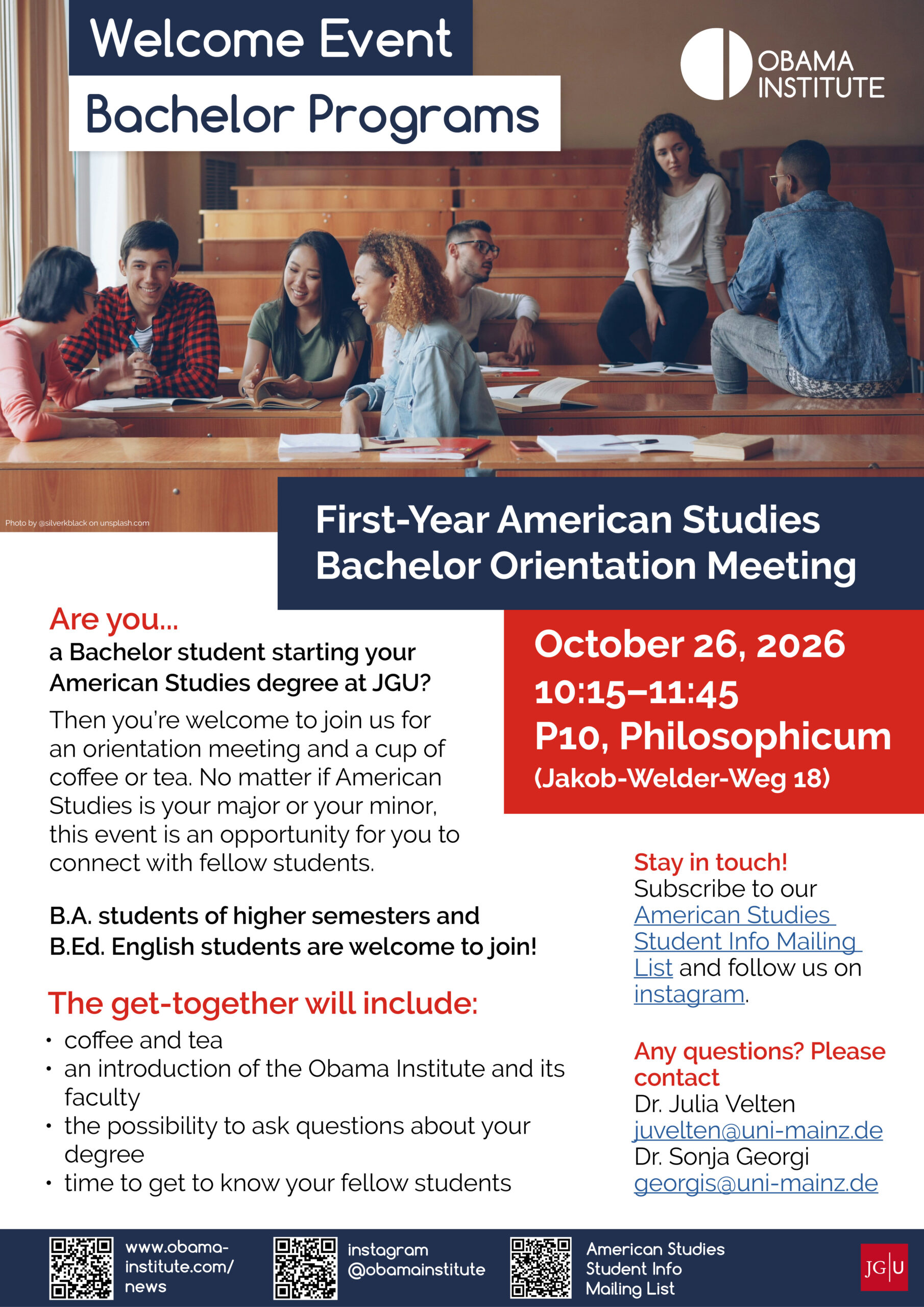
You can download the poster for the event here.

Dec 16 – Guest Lecture: Getting Their Word Out – Native Rhetorical Strategies in the School Press of the Carlisle Indian Industrial School 🗓

Dec 16 – Guest Lecture: Getting Their Word Out – Native Rhetorical Strategies in the School Press of the Carlisle Indian Industrial School 🗓

Guest Lecture by Christianna Stavroudis, M.Sc. (Bonn)

Getting Their Word Out:
Native Rhetorical Strategies in the School Press of the Carlisle Indian Industrial School

December 16, 2025, 6-8pm, P 6 (Philosophicum)

Deemed the “disciples of Gutenberg” by school administrators, the Native student printers at the Carlisle Indian Industrial School were trained to be highly skilled in reproducing the assimilationist rhetoric of the U.S. government. In fact, Native student printers were innovators on their own terms, using the school press as a platform for recording and disseminating their thoughts, experiences, knowledge, and acts of resistance, as well as those of their classmates. In this class session, we will explore some of the strategies that Carlisle student printers and other Carlisle students used to advance their perspectives in the face of heavy administrative censorship. Moreover, we will link these strategies to those used by these students’ predecessors (such as in ledger drawings) and by their descendants (such as in Native code talking employed in WWI and WWII). Finally, we will discuss Indigenous methodologies for pursuing further research on the school press of Indian boarding schools in the United States and Indian residential schools in Canada.

Christianna Stavroudis is an independent researcher based in Bonn. Her latest article, “’Let My People Have a Right’: The Native Activism of Arapaho Chief Paul Boynton” will appear in the Fall issue of The Chronicles of Oklahoma.

You can download the poster for the event here.

Dec 9 – Guest Lecture: Humor on Social Media as Practice of Native American Survivance 🗓

Dec 9 – Guest Lecture: Humor on Social Media as Practice of Native American Survivance 🗓

Guest Lecture by Teresa Fischler (University of Passau)

“Laughter Is Good Medicine”:
Humor on Social Media as Practice of Native American Survivance

December 9, 2025, 6-8pm, P 6 (Philosophicum)

This talk explores the dynamic intersection of Indigenous presence, humor, and survivance within contemporary social media platforms. Drawing on the theoretical framework of Gerald Vizenor’s concept of survivance, the presentation examines how Indigenous content creators utilize humor as a powerful tool for cultural continuity and self-determination. The presentation will outline key concepts of survivance, including manifest manners and the post-Indian, before exploring how humor can serve as a practice of survivance. Focusing on case studies of the comedy group The 1491s and content creators Eagle Blackbird and Che Jim, we will discuss specific examples of Indigenous humor on social media that challenge stereotypes, educate non-Native audiences, and reclaim control over cultural representation.

Teresa Fischler is a doctoral student at the University of Passau. Her research interests include indigenous survivance, autobiography, and social media. Alongside her studies, she is working at the University of Passau, where she is involved with internationalisation and teacher education.

You can download the poster for the event here.

Dec 2 – Guest Lecture CRC 1482: The Commercial Fan Magazine Between Fandom and Brandom 🗓

Dec 2 – Guest Lecture CRC 1482: The Commercial Fan Magazine Between Fandom and Brandom 🗓

Guest Lecture by Dr. Matt Hills (University of Bristol)

“This is Very Much Not On-Message for DWM”: The Commercial Fan Magazine Between Fandom and Brandom — Doctor Who Magazine in the Disney/“RTD2” Era

December 2, 2025, 6-8pm, P 6 (Philosophicum)

This talk will build on my analysis, in the Wiley Handbook of Magazine Studies, of the commercial fan magazine as a type of publication marked by fan-journalists’ “double-time” (Hills 2020). I also addressed the “intra-franchise fandom” characterising the officially-licensed Doctor Who Magazine’s production team (ibid). DWM is unusually long-running, and can be traced back to Doctor Who Weekly (1979-80). The Magazine has variously been analysed as a space in which fan interpretations became more sophisticatedly auteurist (Booy 2012), and as the beginning of official, TV-production attempts to paratextually orient fan readings (Sandifer 2014). The tension between these two types of reading illustrates how the commercial fan magazine remains caught between priorities of branding and giving a voice to “grassroots” fandom. This splitting has been widely testified to in fan studies, with its binaries of affirmational/transformational fandom (Hills 2014); of “new industry-driven” and “traditional” fans (Busse and Gray 2014); of “brand fans” versus “traditional fans” (Linden and Linden 2017: 37), and discussions of “corporatized fandom” (Booth 2019: 29).

However, the commercial fan magazine has to continually find ways of hybridising or combining these versions of “fandom” and “brandom” (Guschwan 2012) in its address. Considering this duality, I will focus on the magazine’s 2022 rebranding after it was announced that Russell T Davies would be returning to show-run the TV programme for a second time, and that Disney would be Doctor Who’s co-producer and global distributor outside the UK. Along with undergoing a re-brand, DWM also welcomed a new editor from issue 595 in 2023. Different editorial eras have been a focus of fanzine analysis (see e.g. Kilburn 2017 and Kibble-White 2017), though the current ‘era’ has yet to receive sustained fan commentary. I will consider how the “Disney Doctor Who” or “RTD2” incarnation of DWM under Jason Quinn’s editorship has distinctively engaged with contemporary norms of branded, franchised cultural production.

Dr. Matt Hills is an honorary Professor at the University of Bristol, and formerly a Professor of Fandom Studies at the University of Huddersfield. He is the author of a number of monographs, beginning with Fan Cultures (Routledge 2002), and has co-edited collections such as Adventures Across Space and Time: A Doctor Who Reader (Bloomsbury 2023) and, most recently, Theatre Fandom (University of Iowa Press 2025). Recent publications include 2025 book chapters in the following edited collections: The Routledge Companion to Media Fandom: Second Edition, Entering the Multiverse (also Routledge) and Affect in Fandom (Amsterdam University Press), with work forthcoming in further collections such as Bridging Design and Fandom (Emerald) and Acquiring Fan Lifestyles (University of Michigan Press).

You can download the poster for the event here.