News
Lecture with
Dr. Rebecca Harrison
(University of West Georgia)
The Female Aesthetic in the Modern South: „A ConfederacyofWaterMoccasins“
July 20, 2016; 10 am (10 Uhr c.t.)
S 1, Philosophicum
Johannes Gutenberg-Universität Mainz
This talk will provide an overview of the concerns occupying Southern woman writers of the modernist period, a field ostensibly dominated by the fugitives and writers such as William Faulkner and Robert Penn Warren. Rather than merely asking her audience to “remember the ladies” (as Abigail Adams once said in a memorable phrase directed at her husband, John), Professor Harrison will speak to the creative and highly innovative work being produced by such authors as Ellen Glasgow, Eudora Welty, Elizabeth Maddox Roberts, and Lilian Smith. Their work, she contends, offers a counter-narrative to the male writers’ ongoing obsession with the “lost cause” of the Civil War. No less concerned with issues of politics, history, the land, and especially gender issues, these women writers provided a new vision of life in the modern South that transcended engrained myths of womanhood and racial identity. Specifically, Professor Harrison will share work from her original archival research into the much-neglected early 20th-century Charleston poet Beatrice Witte Ravenel.
Download the poster here.
Events, Lectures, News
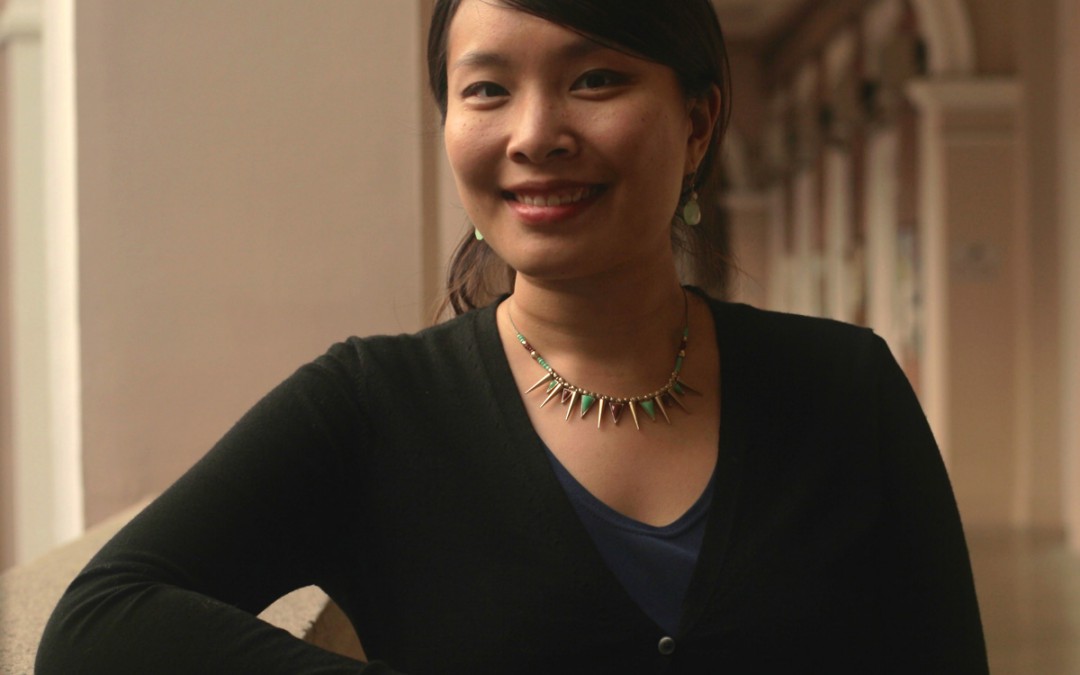
Dr. Selina Lai-Henderson (Research Assistant Professor University of Hong Kong)
“Langston Hughes, Harlem and Shanghai”
Fakultätssaal (Philosophicum)
June 21, 2016, 4-6 pm (c.t.)
Langston Hughes (1902-1967) was the first African American writer to ever set foot on Chinese soil. At the age of 31, he pioneered what none of his contemporaries or predecessors was able to achieve—rewrite the public image of African Americans in the Chinese cultural and intellectual imagination. Hughes’s sojourn in Shanghai and his encounter with Chinese writers shaped his body of work in profound ways that complicated the discussions of race, national identity, and global citizenship in a transnational arena.
Selina Lai-Henderson is Research Assistant Professor of American Studies at The University of Hong Kong. She was a Fulbright scholar at Stanford University in 2011-12. She is the author of Mark Twain in China (Stanford University Press, 2015), and she is currently working on black internationalism of Langston Hughes and W.E.B. Du Bois in China.
Download the flyer
Events, Lectures, News
June 16, 2016, 6 p.m., P1: Keynote Lecture “Geist: Mind and Brain” within the Forum Geisteswissenschaft: Eine Positionsbestimmung – Veranstaltungsreihe zur 70 Jahre Wiedereröffnung der Johannes Gutenberg Universität
After her keynote lecture, she will receive an honorary doctorate.
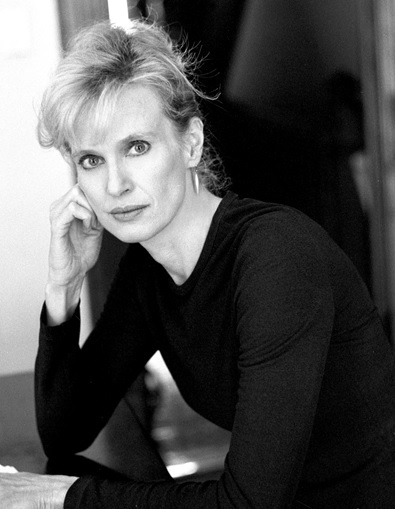
About Siri Hustvedt:
She is one of the most significant contemporary American writers. She received her PhD in English from Columbia University with a dissertation on Charles Dickens. With a body of work comprising 7 internationally received novels and 4 collections of essays, she has opened new ways of connecting fiction and literary criticism. In her work, she draws on philosophical, psychoanalytical, neuroscientific and gender theories in order to establish a reciprocal subjectivity connecting body and mind; a notion that also informs her work as a lecturer of psychiatry at Cornell University’s Weill Medical College. Siri Hustvedt is an associate member of the DFG-funded research training group “Life Sciences, Life Writing: Experiences at the Boundaries of Human Life between Biomedical Explanation and Lived Experience” (GRK 2015/1), at Johannes Gutenberg-University Mainz.
Events, Lectures, News
June 16, 2016, 10-12 a.m., Philosophicum, Hörsaal, P 11: two-hour seminar with doctoral and master students
June 17, 2016, 10-12 a.m., Institut für Geschichte, Theorie und Ethik der Medizin der Johannes-Gutenberg Universität Mainz, Am Pulverturm 13: Seminar with doctoral candidates of the Research Training Group “Life Sciences, Life Writing: Experiences at the Boundaries of Human Life between Biomedical Explanation and Lived Experience” (GRK 2015/1)
Download the flyer
About Siri Hustvedt:
She is one of the most significant contemporary American writers. She received her PhD in English from Columbia University with a dissertation on Charles Dickens. With a body of work comprising 7 internationally received novels and 4 collections of essays, she has opened new ways of connecting fiction and literary criticism. In her work, she draws on philosophical, psychoanalytical, neuroscientific and gender theories in order to establish a reciprocal subjectivity connecting body and mind; a notion that also informs her work as a lecturer of psychiatry at Cornell University’s Weill Medical College. Siri Hustvedt is an associate member of the DFG-funded research training group “Life Sciences, Life Writing: Experiences at the Boundaries of Human Life between Biomedical Explanation and Lived Experience” (GRK 2015/1), at Johannes Gutenberg-University Mainz.
Events, Lectures
Lecture with
Dr. Dr. h.c. Siri Hustvedt
(Brooklyn)
The Writing Self and the Psychiatric Patient
June 18, 2016; 6 am (18 Uhr c.t.)
Alte Mensa, Atrium Maximum
Johannes Gutenberg-Universität Mainz
Drawing from my experiences as a volunteer writing teacher for psychiatric patients on the locked wards of the Payne Whitney Clinic in New York City, I ask how in an age of “biological psychiatry,” writing might be framed as a therapeutic activity for people diagnosed with mental illness. I argue that many of the current models in psychiatry are too rigid and/or confused to adequately address the subtle and beneficial effects writing has for individual patients. The objectification of inner thoughts, stories, and emotions in texts can help organize a person’s view of his or her subjectivity in ways that enhance reflection.
About Siri Hustvedt:
She is one of the most significant contemporary American writers. She received her PhD in English from Columbia University with a dissertation on Charles Dickens. With a body of work comprising 7 internationally received novels and 4 collections of essays, she has opened new ways of connecting fiction and literary criticism. In her work, she draws on philosophical, psychoanalytical, neuroscientific and gender theories in order to establish a reciprocal subjectivity connecting body and mind; a notion that also informs her work as a lecturer of psychiatry at Cornell University’s Weill Medical College. Siri Hustvedt is an associate member of the DFG-funded research training group “Life Sciences, Life Writing: Experiences at the Boundaries of Human Life between Biomedical Explanation and Lived Experience” (GRK 2015/1), at Johannes Gutenberg-University Mainz.
Download the flyer