Events, Lectures, News
Prof. Michael Boyden (Uppsala University)
June 18, 2018, 12-2 p.m., P 5 (Philosophicum)
Environmental humanists routinely take their departure from the romantic ecology of the mid-
nineteenth century, dismissing earlier climate theories as racist, unscientific, or overly impressionistic. Drawing on a number of salient examples, this lecture revalues the pre-1850 period as one of intense climatic sensibility in American literary culture. It argues that early climate theories fused science and sentiment, culture and climate in ways that citizen science, public health, epigenetics, and new materialist philosophy are aspiring to do at the present juncture. Moreover, unlike modern climate science, with its reliance on statistics, remote sensing, and performance indexes, these climate theories – often anachronistically understood as environmental determinism – eschewed philosophical speculation and prioritized experiential, sensory knowledge as a crucial interface between the emotions, thought, and the natural world. The oft-lamented dualism of Western philosophy, which has been taken as the root of our troubled relation to the environment, was less pronounced in the climatic doctrines that we tend to consign to a naïve, predisciplinary phase in the history of climate awareness than in current debates on global warming. The lecture thus offers a plea for more historical awareness in the climate debate and warns against overly monolithic narratives of ecological modernization.
Michael Boyden is Associate Professor of American Literature at Uppsala University, Sweden. He is the author of Predicting the Past: The Paradoxes of American Literary History (Leuven UP, 2009). He has a new book project underway entitled Climate and Sensibility in American Literature, 1780-1850.
You can find the event poster here.
Events, Lectures, News
Prof. Christopher Breu (Illinois State University)
June 12, 2018, 6-8 p.m., P 103 (Philosophicum)
This talk draws upon biopolitical theory and Marxist theory to reinvigorate an economic, social, technological, and ecological conception of infrastructure. Given the recent material turn in critical theory, it is high time to reconsider the Marxist distinction between infrastructure and superstructure. If, during the cultural turn, the superstructure was privileged to the point of an almost complete effacement of the infrastructure (or base), in our own moment of proliferating infrastructures, biopolitical production, and ecological crisis, the concept of the infrastructure needs to be both affirmed and retheorized. This talk begins this work.
Christopher Breu is Professor of English at Illinois State University, USA.
You can find the event poster here.
Events, News
Steven Meyers, M.A.
(PR Coordinator, CNN International)
June 5, 2018, 6-8 p.m., P 103 (Philosophicum)
Steven Meyers graduated from JGU with an M.A. in American Studies in 2015. In his talk, he will discuss his work as PR coordinator at an international news channel as well as career options for graduates in American Studies. In addition, the event will offer ample time for Q&A.
Events, Lectures, News
Prof. Matthew Pethers (University of Nottingham)
May 29, 2018, 6-8 p.m., P 103 (Philosophicum)
While literary critics have increasingly addressed questions of temporality across a wide range of early American genres, book historians have yet to fully consider the role that temporality played in the production, distribution and reception of eighteenth- and early-nineteenth century texts. In beginning to redress that oversight, this talk will consider three interrelated models of print time – Narrative Time (formal and thematic chronologies), Reading Time (sequences and durations of consumption) and Market Time (aggregate publication rhythms) – as they were articulated during the post-Revolutionary period via the staggered material embodiments of early American literature. More particularly, I intend to analyse the serialized novel, and how its distinctive dynamics of progress and delay were connected to the interconnected poetics of narrative suspense, readerly desire, and market repetition that underlie the crucial role periodical and fascicule publication played in the development of American fiction. Examining texts such as Judith Sargent Murray’s sentimental novel The Gleaner and Hugh Henry Brackenridge’s picaresque novel Modern Chivalry, I will explore how early American authors and publishers tried, and at times failed, to use the extended temporalities of serialization to legitimate and commercialize the culturally suspect novel-form.
For more information see the poster
Events, Lectures, News
The Future of Transatlantic Relations: A Town Hall Meeting
James W. Herman (U.S. Consul General, Frankfurt)
May 23, 2018, 4-6 p.m., P 5 (Philosophicum)
The Obama Institute for Transnational American Studies invites all students and faculty to a open-mike hall meeting with U.S. Consul General James W. Herman (U.S. Consulate, Frankfurt), centered on the question of what the future of transatlantic relations are. With a format geared towards open discussion and a question and answer approach, this town hall meeting gives everyone an opportunity to get an idea of where U.S.-German relations, and the transatlantic exchange in general, stand today, and where they may end up in the future, from one of the most important U.S. representatives in Europe.
Jim Herman assumed charge of the U.S. Consulate General in Frankfurt on August 14, 2015. A career Foreign Service Officer, he is the Ambassador’s representative to the German states of Hessen, Rhineland-Palatinate, Baden-Württemberg, and Saarland. As such, he leads the largest U.S. consulate in the world.
Events, General, News
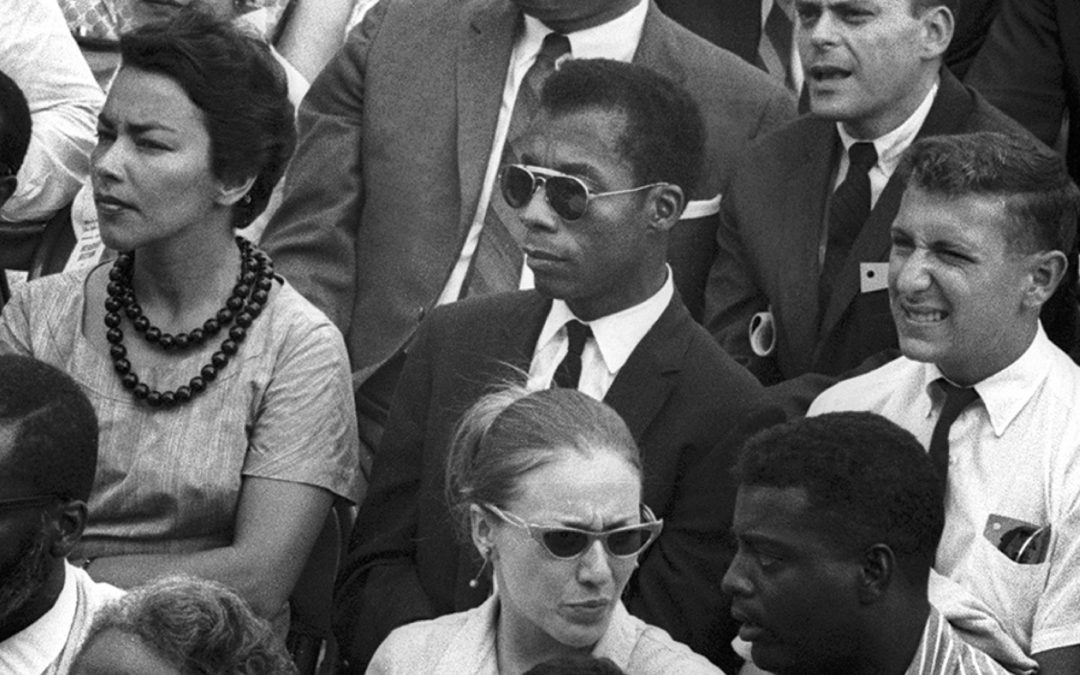
I Am Not Your Negro (2017), dir. Raoul Peck
May 16, 2018, 8.30 p.m., Ciné Mayence
Raoul Peck’s acclaimed 2017 documentary I Am Not Your Negro will be screened at Ciné Mayence, followed by a discussion with Prof. Mita Banerjee (Obama Institute), Prof. Axel Schäfer (Obama Institute) and Prof. Thomas J. Hrach (University of Memphis)
For more information see the poster