Events, Exchange Programs, Lectures, News
David Thomson (Sacred Heart University, CT, USA)
Tuesday, May 28, 2019
4-6 p.m.
P 207 (Philosophicum)
The story of transatlantic finance in the nineteenth century has often been one that fixates largely on a US-British binary. Capital flows between these two nations (increasingly centered around financial instruments pertaining to cotton) have been detailed at length in an array of monographs. While some historians have explored the power of Dutch financiers, especially as it pertained to American railroad stock, little attention has been paid to German financiers in nineteenth century specifically as it pertains to their increasing interest and interconnectedness with the United States. While partly down to a dearth of surviving primary source evidence, the importance and connections between German financiers and American counterparts helps to explain evolving notions of transatlantic finance but also in part the respective rise of these two economies as they eclipsed the British by the early twentieth century. What began as two economies operating on the periphery of a dominant British financial network in the earlier part of the nineteenth century evolved by century’s end. Finance played but one part in this narrative of American and German ascension, but the financing of debt is one window into this critical story of the nineteenth century.
David Thomson is a historian of the 19th century United States with a special focus on the history of capitalism in the Civil War era. Thomson received his Ph.D. from the University of Georgia and joined the faculty at Sacred Heart in the fall of 2016. He teaches both halves of the United States history survey as well as electives on the American Civil War, Reconstruction, American Capitalism, and United States Foreign Policy.
You can download the poster for the event here.
Events, Lectures, News
Sasha Pimentel (University of Texas at El Paso)
Thursday, May 23, 2019
12 noon – 2 p.m.
003 SR 07 (BKM)
Visit sashapimentel.com/about for more info on Sasha Pimentel.
You can download the poster for the event here.
Events, Lectures, News
Hsuan L. Hsu (University of California, Davis, USA)
May 14, 2019
10 a.m.-12 noon, Philosophicum I, P 109a
This talk will consider how racial and geographical disparities inflect dystopian representations of environmental risk. Drawing from literary and performative stagings of atmospheric violence—including smog, factory fumes, industrial accidents, and stink bombs—it will consider how we might rethink the “Anthropocene” (perhaps better termed the racial, colonial Capitalocene) in connection with transnational and settler patterns of “air conditioning” or atmospheric manipulation.
Hsuan L. Hsu is Professor of English at UC Davis. He earned his A.B. in Literature from Harvard University in 1998 and his Ph.D. in English and American Literature from U.C. Berkeley in 2004. He joined the UC Davis faculty in 2008. His interests include 19th and 20th-Century U.S. literature, Asian diasporic literature, race studies, cultural geography, sensory studies, and the environmental humanities. He is the author of Geography and the Production of Space in Nineteenth-Century American Literature (Cambridge, 2010) and Sitting in Darkness: Mark Twain, Asia, and Comparative Racialization (NYU, 2015). He is working on a manuscript entitled The Smell of Risk: Atmospheric Disparities and the Olfactory Arts (under contract with NYU Press), which considers olfactory aesthetics as a mode of engaging with environmental injustice in literature, art, memoir, and law.
You can download the poster for the event here.
Events, Lectures, News
Elizabeth Tandy Shermer
(Loyola University Chicago)
May 14, 2019
4 p.m.–6 p.m. (c.t.), Philosophicum I, P207
Why do more than 44 million Americans now owe almost $1.5 trillion in student loans? Many want to blame the banks. But lenders actually fought the Senators, Representatives, and Presidents eager to make students finance their educations after World War II. Only when Congress revised the programs in the early 1970s to increase profitability did bankers embrace a financial sector that has become a pathway into poverty, not prosperity.
 Elizabeth Tandy Shermer is an Associate Professor of History at Loyola University Chicago specializing in the fields of capitalism, business, labor, political ideas and ideologies, regional development, and urbanization. Among her books and edited volumes are Sunbelt Capitalism: Phoenix and the Transformation of American Politics (University of Pennsylvania Press, 2013), Barry Goldwater and the Remaking of the American Political Landscape (University of Arizona Press, 2013), and The Right and Labor in America: Politics, Ideology, and Imagination (University of Pennsylvania Press, 2012).
You can download the poster for the event here.
News, Workshops
Research Group “Transnational Periodical Cultures”
Periodicals and Globalization (Workshop V)
May 8, 2019, 9:45 a.m.-6 p.m., Campus Germersheim (Raum 117, Sitzungsraum)
The research group “Transnational Periodical Cultures” (Jutta Ernst, Dagmar von Hoff, Bjørn von Rimscha, Oliver Scheiding) holds a series of workshops on the following dates:
May 8, 2019 – Workshop V – Periodicals and Globalization
June 5, 2019 – Workshop VI – Translation and Transnational Periodical Cultures
June 26, 2019 – Doktorandenworkshop – Aktuelle Theorie- und Methodenprobleme der Zeitschriftenforschung
You can find the program for the event on May 8, 2019 here.
If you are interested in attending one of the workshops or specific talks, please contact one of the organizers mentioned above.
For further information, please visit www.transnationalperiodicalcultures.net.
Events, Lectures, News
Walter Benn Michaels
(University of Illinois, Chicago)
May 7, 2019
4 p.m.-6 noon, Philosophicum I, P207
The subject of this talk will be the death of both the author and the working class, with a particular focus on Didier Eribon’s Retour a Reims.
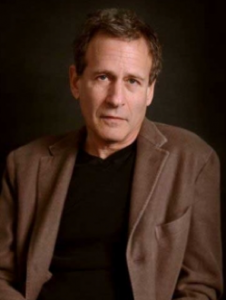
Walter Benn Michaels is a Professor of American Literature and Literary Theory at the University of Illinois, Chicago. Michaels’s work has generated a set of arguments and questions around a host of issues that are central to literary studies: problems of culture and race, identities national and personal, the difference between memory and history, disagreement and difference, and meaning and intention in interpretation. He earned his Ph.D. in 1975 from the University of California, Santa Barbara. Michaels also taught at the Johns Hopkins University and the University of California, Berkeley.
You can download the poster for the event here.