Dec 5 – The President That Is Not One 🗓
“The President That Is Not One”
Prof. Donald E. Pease
December 5, 2017, 10-12 a.m., P 6 (Philosophicum)
For more information see the poster.
For more information see the poster.
Lecture
Jerry Ellis: “The Trail Leads Home”
Awards
Obama Dissertation Prize
Hans Galinsky Memorial Prize
For more information see the Dietz Lecture flyer.
Conference organizers: Nele Sawallisch, Johanna Seibert, Pia Wiegmink, Frank Obenland
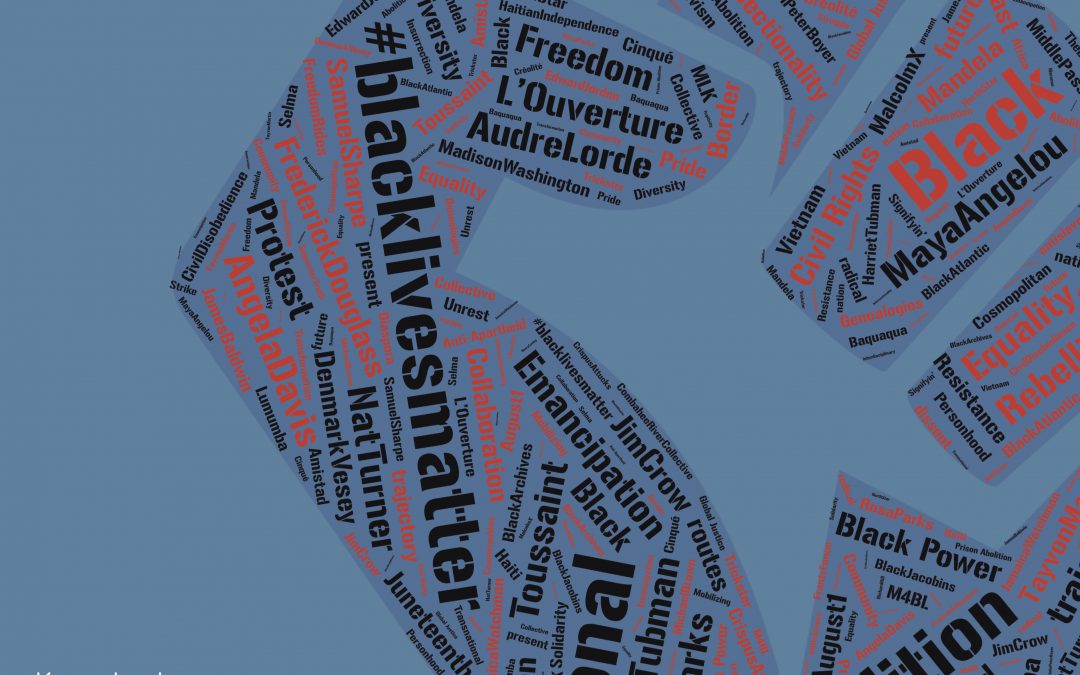
This conference hosted by the Transnational American Studies Institute aims at assessing and theorizing past and present forms of black intellectual, political, and cultural resistance from the era of abolitionist campaigns against the transatlantic slave trade to the recent global protest formation of Black Lives Matter.
For more information, please visit the conference page.
10-11.30a.m., P 105
Among the most developed nations, the United States has a rather unique health care system. The basic question is why?
While often leading in drug discovery, new technologies, and treatments, the U.S. does not have universal coverage. Yet it spends more per capita on health care than all other developed nations but its health indictors do not match spending. Adding to the mystery, many non-US come to America to receive care, especially when they are very sick.
How did the US get here? Come listen and take part in a discussion: “The US Health Care System: How, Why, What Next?” and hear about the political, economic and policy factors that have shaped and will continue to shape the US system.
On cooperation with the Atlantische Akademie.

As Americans celebrated the 4th of July, so too did the Obama Institute.
Festivities began at noon with a lecture by Dr. David Sirakov, Director of the Atlantic Academy.


Faculty and students were at hand in the afternoon to answer questions about posters showcasing the varied research projects of the institute.


In the evening, Prof. Philipp Gassert, President of the German Association of American Studies and Professor of Contemporary History at the University of Mannheim gave his lecture “A Time for Optimism: Doing American Studies in an Era of Global Transformations.”
Afterward, a reception provided ample opportunity to continue discussions over a glass of wine.


Michaela Hoenicke Moore (University of Iowa)
According to conventional understanding World War Two brought about an internationalist consensus at home yielding widespread domestic support for the country’s subsequent global, military role. A closer examination of how Americans responded to the dramatic events at mid-century, however, reveals a more complex picture. Ordinary citizens vigorously participated not only in the great debate preceding Pearl Harbor but also weighed in on public controversies of the early Cold War. These views at the grassroots level reveal a continuous practice of patriotic dissent and a deep reservoir of alternative visions for America’s role in the world.
Michaela Hoenicke Moore is Associate Professor of History at the University of Iowa. She has published three books, including a study on how Americans understood the Third Reich, entitled Know Your Enemy: The American Debate on Nazism, 1933-45 (Cambridge University Press, 2010) which won a national award for the best book in diplomatic history written by a woman. She is currently working on a project exploring “The Varieties of American Patriotism” and US foreign policy debates since the 1930s.