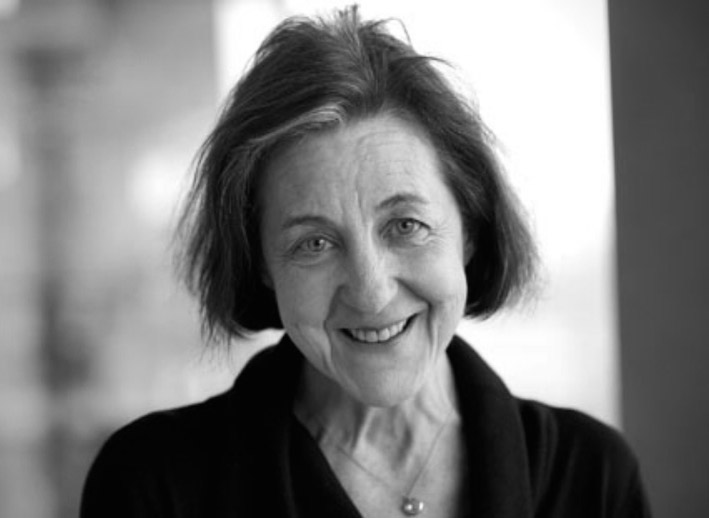
Guest Lecture with Paula A. Treichler on 11/24/2015: “Medicine, Money, and Illness Narratives: Whose Story?”

Guest Lecture with Paula A. Treichler on 11/24/2015: “Medicine, Money, and Illness Narratives: Whose Story?”

Guest Lecture

Paula A. Treichler

“Medicine, Money, and Illness Narratives: Whose Story?”

11/24/2015
4-6pm, SB II, 03-436

Paula A. Treichler is Professor Emerita at the Institute of Communications Research at the University of Illinois at Urbana-Champaign. She is the author and editor of a number of books, including How to Have Theory in an Epidemic: Cultural Chronicles of AIDS, A Feminist Dictionary, and The Visible Woman: Imagining Technologies, Gender, and Science.

Download the flyer

Guest Lecture with Elisabeth Engel on 11/18/2015:  “Risks will be Taken”

Guest Lecture with Elisabeth Engel on 11/18/2015: “Risks will be Taken”

Guest Lecture

Elisabeth Engel

“‘Risks will be Taken:’ Insurance and the Uncertain Beginnings of American Independence, 1770s -1840s”

11/18/2015

4:15-5:45pm, Philosophicum, P103

Elisabeth Engel is postdoctoral research fellow at the German Historical Institute, Washington, DC. In her lecture, she will explore how notions of “risk” were constructed and inscribed into the everyday routines of revolutionary Americans as the British imperial power retreated.

Dates for info sessions on exchange programs announced

Dates for info sessions on exchange programs announced

The information sessions on the institute’s exchange opportunities will be held in HS 7 (Forum) on the following days:

  • General info session on all exchange programs: Thursday, Oct. 29, 6-8pm
  • Info session on the department direct exchange: Thursday, Nov. 5, 6-8pm
  • Info session on the ERASMUS exchange: Wednesday, Nov. 11, 6-8pm

All students interested in studying in the United States, in Canada or at an European university should not miss these information sessions.

CALL FOR PAPERS: Space, Mobility, and Power in Early America and the Atlantic World, 1650-1850

CALL FOR PAPERS: Space, Mobility, and Power in Early America and the Atlantic World, 1650-1850

A conference co-sponsored by the McNeil Center for Early American Studies, the University Paris Diderot, the University Paris-3 Sorbonne Nouvelle, and the Institute of the Americas (France)

Organizing committee: Claire Bourhis-Mariotti (Paris-8), Pierre Gervais (Paris-3), Marie-Jeanne Rossignol (president, Paris Diderot), Rahma Jerad (Carthage), William Slauter (Paris-Diderot).

Program/Scientific Committee : Emma Hart (St Andrews), Allan Potofsky (president, Paris Diderot), Daniel K. Richter (McNeil Center, UPennsylvania) Oliver Scheiding (Mainz), Irmina Wawrzyczek (Lublin), Bertrand van Ruymbeke (Paris-8).

Principal Venue : University Paris Diderot Paris 7.

Dates : December 8-10 2016


The European Early American Studies association proposes to focus its 2016 meeting on the interrelated themes of Space, Mobility, and Power. In recent years, many scholars have adopted an Atlantic approach to the study of early modern empires. Whereas imperial history viewed power as flowing from metropolitan center to colonial periphery, focused on political institutions, affording little agency to non-white actors, Atlantic history has broadened our understanding of the dynamic process of early modern colonization. Although the limitations of Atlantic history continue to be debated, the approach has undeniably focused attention on the mobility of peoples, commodities, and cultures, and revealed the multiple channels through which power and people flowed both within and among continental spaces. Indeed, its efficacy is demonstrated by recent work that re-evaluates some of the core topics of the old imperial history, including state formation, imperial government, political economy, religious communication networks, sovereignty, and European territorial expansion, to name a few examples.

One consequence of this process of pouring old wine into new bottles has been an enhanced focus on the connected issues of space, mobility, and power. If political power did not flow from center to periphery, how did it function? How did the scale and character of the American landscape affect European claims to power over it? How did provincial and colonial agents in the New World relate to imperial centers of authority when traders, trappers, soldiers, slaves and missionaries, among others, were entangled in a complex and often conflictual relationship with Imperial-Atlantic decision-makers? Did the European colonial experience in North America prompt Atlantic political and economic integration in the period of early globalization? What were the social problems created by the forced circulation of people and goods at the local and transnational levels? How was local production in certain regions linked to new forms of international exchange? We welcome proposals that address these questions or otherwise consider the interactions of space, mobility, and power in the history of early America and its relationship to the larger Atlantic world. Possible panel topics include:


  • The flow of wealth around the Atlantic
  • Degrees of unfreedom in the Atlantic world’s labour regimes
  • Migrations into, out of, and around the Atlantic World
  • Individuals and societies on the margins or outside of formal Atlantic empires
  • Interactions between agents of empire and others
  • Space, mobility, and power within and among indigenous polities
  • Mapping and documenting space
  • Contested spaces
  • The territorial limits of empire
  • The role of religion/religious networks in mobilizing space and power
  • Textual mobility and the traffic of books, letters, and documents

–    Censorship and other means of controlling the flow of ideas and information

  • Commerce and political diplomacy between republics and reformed monarchies
  • Merchant cultures and practices across the boundaries of empires
  • Cultural and linguistic cohesions within new political regimes


Dates:

1 December 2015: Application deadline. The application is to consist of three documents: a 300-400 word abstract of the paper; a 100 word biographical statement; and a 2-page (maximum) cv. Please entitle each document with your last name, followed by eeasa2016. For example: condorceteeasa2016.doc. The conference address for submissions: eeasaparis2016@gmail.com

30 January 2016. Response by the program committee.

15 November 2016. Submission of the conference papers which will be precirculated in limited fashion.

8-10 December 2016: Conference, “Space, mobility, power in Early America and the Atlantic World, 1650-1850”.

Lecture Series with Greg Robinson: May 12 to May 22, 2015

Lecture Series with Greg Robinson: May 12 to May 22, 2015

### You’re viewing an archived post from our previous website. Please note that some links or information may be outdated. For updated resources or questions, please get in touch with us. ###

Greg Robinson is Professor of History at the Université du Québec À Montréal, Canada and Obama Fellow. He is visiting the University of Mainz in May and will give several lectures dealing with a variety of topics.
A preliminary program can be downloaded here.

Dietz Memorial Lecture with Prof. Gerd Hurm

Dietz Memorial Lecture with Prof. Gerd Hurm

Thursday, 11.12.2014, 12.15-13.15, Room 00 151, Audi MaxThe Institute for Transnational American Studies (ITAS) and IANAS host this year’s Dietz Memorial lecture. The lecture is given by Prof. Gerd Hurm working for the Center for American Studies at the University of Trier. His lecture is entitled “Transnational American Studies: Rethinking Edward Steichen’s Epochal Photography Exhibition ‘The Family of Man’.”