Events, Lectures, News
Hsuan L. Hsu (University of California, Davis, USA)
May 14, 2019
10 a.m.-12 noon, Philosophicum I, P 109a
This talk will consider how racial and geographical disparities inflect dystopian representations of environmental risk. Drawing from literary and performative stagings of atmospheric violence—including smog, factory fumes, industrial accidents, and stink bombs—it will consider how we might rethink the “Anthropocene” (perhaps better termed the racial, colonial Capitalocene) in connection with transnational and settler patterns of “air conditioning” or atmospheric manipulation.
Hsuan L. Hsu is Professor of English at UC Davis. He earned his A.B. in Literature from Harvard University in 1998 and his Ph.D. in English and American Literature from U.C. Berkeley in 2004. He joined the UC Davis faculty in 2008. His interests include 19th and 20th-Century U.S. literature, Asian diasporic literature, race studies, cultural geography, sensory studies, and the environmental humanities. He is the author of Geography and the Production of Space in Nineteenth-Century American Literature (Cambridge, 2010) and Sitting in Darkness: Mark Twain, Asia, and Comparative Racialization (NYU, 2015). He is working on a manuscript entitled The Smell of Risk: Atmospheric Disparities and the Olfactory Arts (under contract with NYU Press), which considers olfactory aesthetics as a mode of engaging with environmental injustice in literature, art, memoir, and law.
You can download the poster for the event here.
Events, Lectures, News
Elizabeth Tandy Shermer
(Loyola University Chicago)
May 14, 2019
4 p.m.–6 p.m. (c.t.), Philosophicum I, P207
Why do more than 44 million Americans now owe almost $1.5 trillion in student loans? Many want to blame the banks. But lenders actually fought the Senators, Representatives, and Presidents eager to make students finance their educations after World War II. Only when Congress revised the programs in the early 1970s to increase profitability did bankers embrace a financial sector that has become a pathway into poverty, not prosperity.
 Elizabeth Tandy Shermer is an Associate Professor of History at Loyola University Chicago specializing in the fields of capitalism, business, labor, political ideas and ideologies, regional development, and urbanization. Among her books and edited volumes are Sunbelt Capitalism: Phoenix and the Transformation of American Politics (University of Pennsylvania Press, 2013), Barry Goldwater and the Remaking of the American Political Landscape (University of Arizona Press, 2013), and The Right and Labor in America: Politics, Ideology, and Imagination (University of Pennsylvania Press, 2012).
You can download the poster for the event here.
Events, Lectures, News
Walter Benn Michaels
(University of Illinois, Chicago)
May 7, 2019
4 p.m.-6 noon, Philosophicum I, P207
The subject of this talk will be the death of both the author and the working class, with a particular focus on Didier Eribon’s Retour a Reims.
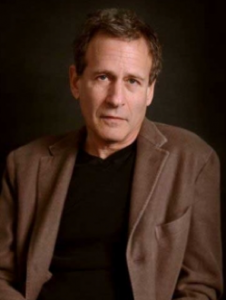
Walter Benn Michaels is a Professor of American Literature and Literary Theory at the University of Illinois, Chicago. Michaels’s work has generated a set of arguments and questions around a host of issues that are central to literary studies: problems of culture and race, identities national and personal, the difference between memory and history, disagreement and difference, and meaning and intention in interpretation. He earned his Ph.D. in 1975 from the University of California, Santa Barbara. Michaels also taught at the Johns Hopkins University and the University of California, Berkeley.
You can download the poster for the event here.
Events, Lectures, News
Walter Benn Michaels
(University of Illinois, Chicago)
May 7, 2019
10 a.m.-12 noon, Philosophicum I, P109a
“The differentiation between left and right neoliberalism doesn’t really undermine the way it which it is deeply unified in its commitment to competitive markets and to the state’s role in maintaining competitive markets. For me the distinction is that ‘left neoliberals’ are people who don’t understand themselves as neoliberals. They think that their commitments to anti-racism, to anti-sexism, to anti-homophobia constitute a critique of neoliberalism. But if you look at the history of the idea of neoliberalism you can see fairly quickly that neoliberalism arises as a kind of commitment precisely to those things.” (Walter Benn Michaels)
Walter Benn Michaels is a Professor of American Literature and Literary Theory at the University of Illinois, Chicago. Michaels’s work has generated a set of arguments and questions around a host of issues that are central to literary studies: problems of culture and race, identities national and personal, the difference between memory and history, disagreement and difference, and meaning and intention in interpretation. He earned his Ph.D. in 1975 from the University of California, Santa Barbara. Michaels also taught at the Johns Hopkins University and the University of California, Berkeley.
You can download the poster for the event here.
Events, Lectures, News
Jeffrey Herlihy-Mera
(University of Puerto Rico at Mayaguez)
April 30, 2019
10 a.m.-12 noon, Philosophicum I, P109a
This talk is based on the monograph After American Studies, a timely critique of national and transnational approaches to community, and their forms of belonging and trans/patriotisms. Using reports in multicultural psychology and cultural neuroscience to interpret an array of cultural forms—including literature, art, film, advertising, search engines, urban planning, museum artifacts, visa policy, public education, and ostensibly non-state media—the argument fills a gap in contemporary criticism by a focus on what makes cultural canons symbolically effective (or not) for an individual exposed to them. The talk will address the limits of transnationalism as a paradigm, evidencing how such approaches often reiterate presumptive and essentialized notions of identity that function as new dimensions of exceptionalism.

Jeffrey Herlihy-Mera is a distinguished researcher and associate professor in the Department of Humanities at the University of Puerto Rico at Mayaguez. He earned his Ph.D. in “Art, Literature, and Thought” from the Universidad Pompeu Fabra in Barcelona. This semester he is Fulbright Distinguished Chair of American Studies at Eötvös Loránd University in Budapest.
You can download the poster for the event here.
Events, Lectures, News
Bertrand van Ruymbeke (Université Paris 8)
May 15, 2019
10 a.m.-12 noon, N3 (Muschel)
How did the image of the New World evolve in France from the end of the Seven Years’ War in 1763 to the French Revolution in 1789? What was the intellectual and constitutional impact of the American revolution on pre-revolutionary French society? An original way to answer these two related questions is to look at prize-winning contests (concours) offered by the Académies. These contests were immensely popular in eighteenth-century France as several hundreds were organized, drawing thousands of memoirs over the course of the century. These essay contests bore on a wide range of topics in science, agriculture, history, law, medicine, commerce, gambling, fashion, and geography, as well as a myriad of regional issues, but also on the Atlantic World, slavery, the European «discovery» of the New World, the American revolution, colonization, and trade, particularly in the Académies of Pau, Lyon, Marseille, Toulouse, and Paris. Eloges competitions on major figures, historical or contemporaneous, related to New Worlds, such as Columbus, Franklin, Vergennes or Cook, were also held in the Académies of Marseille, Amiens, Cap François (on the island of Saint-Domingue), and Paris. Memoirs submitted to these contests, along with pamphlets, press articles, travel accounts, compilations of translated State Constitutions, and history books published on the American Revolution, offer a privileged view into a French—and to some extent European—collective reflection on the colonization of the New World and the birth of the American republic.
Bertrand van Ruymbeke is Professeur de Civilisation et d’Histoire Américaines at the Département d’Études des Pays Anglophones at Université Paris 8.
You can download the poster for the event here.