Events, Lectures, News
Prof. Matthew Pethers (University of Nottingham)
May 29, 2018, 6-8 p.m., P 103 (Philosophicum)
While literary critics have increasingly addressed questions of temporality across a wide range of early American genres, book historians have yet to fully consider the role that temporality played in the production, distribution and reception of eighteenth- and early-nineteenth century texts. In beginning to redress that oversight, this talk will consider three interrelated models of print time – Narrative Time (formal and thematic chronologies), Reading Time (sequences and durations of consumption) and Market Time (aggregate publication rhythms) – as they were articulated during the post-Revolutionary period via the staggered material embodiments of early American literature. More particularly, I intend to analyse the serialized novel, and how its distinctive dynamics of progress and delay were connected to the interconnected poetics of narrative suspense, readerly desire, and market repetition that underlie the crucial role periodical and fascicule publication played in the development of American fiction. Examining texts such as Judith Sargent Murray’s sentimental novel The Gleaner and Hugh Henry Brackenridge’s picaresque novel Modern Chivalry, I will explore how early American authors and publishers tried, and at times failed, to use the extended temporalities of serialization to legitimate and commercialize the culturally suspect novel-form.
For more information see the poster

Events, Lectures, News
The Future of Transatlantic Relations: A Town Hall Meeting
James W. Herman (U.S. Consul General, Frankfurt)
May 23, 2018, 4-6 p.m., P 5 (Philosophicum)
The Obama Institute for Transnational American Studies invites all students and faculty to a open-mike hall meeting with U.S. Consul General James W. Herman (U.S. Consulate, Frankfurt), centered on the question of what the future of transatlantic relations are. With a format geared towards open discussion and a question and answer approach, this town hall meeting gives everyone an opportunity to get an idea of where U.S.-German relations, and the transatlantic exchange in general, stand today, and where they may end up in the future, from one of the most important U.S. representatives in Europe.
Jim Herman assumed charge of the U.S. Consulate General in Frankfurt on August 14, 2015. A career Foreign Service Officer, he is the Ambassador’s representative to the German states of Hessen, Rhineland-Palatinate, Baden-Württemberg, and Saarland. As such, he leads the largest U.S. consulate in the world.
Events, General, News
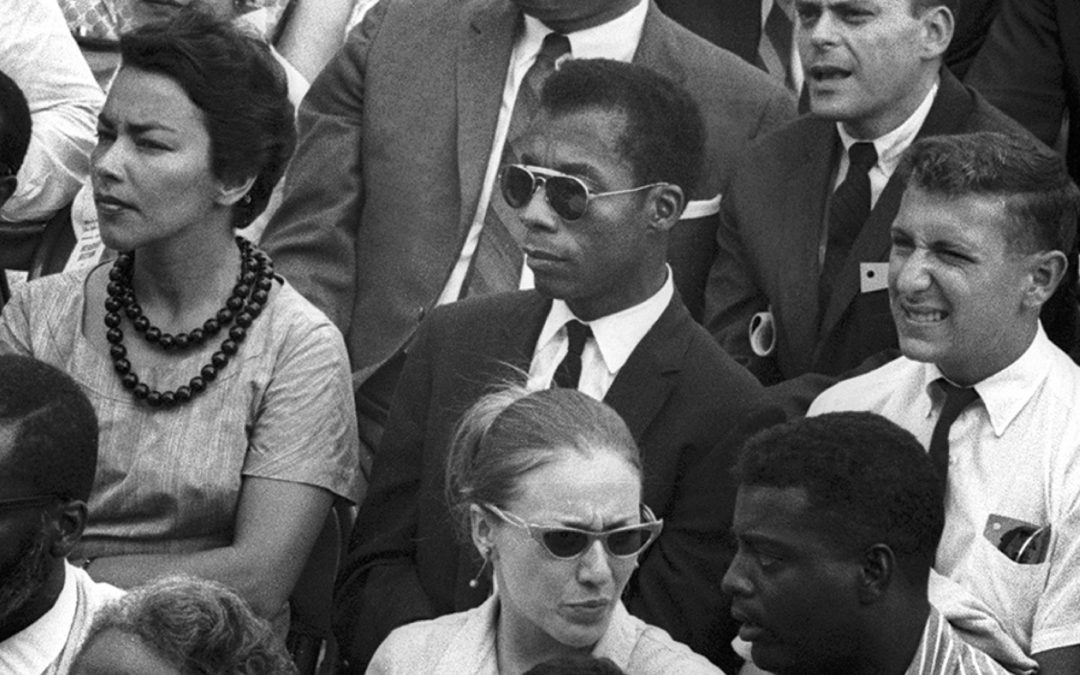
I Am Not Your Negro (2017), dir. Raoul Peck
May 16, 2018, 8.30 p.m., Ciné Mayence
Raoul Peck’s acclaimed 2017 documentary I Am Not Your Negro will be screened at Ciné Mayence, followed by a discussion with Prof. Mita Banerjee (Obama Institute), Prof. Axel Schäfer (Obama Institute) and Prof. Thomas J. Hrach (University of Memphis)
For more information see the poster
Events, Lectures, News
Sean Lovitt, M.A. (University of Delaware)
May 11, 2018, 10-12 a.m., P 103 (Philosophicum)
The Black Arts Movement is normally associated with Black Nationalism, which, although a crucial influence, cannot account for the heterogeneity of the social movements that animated Black Arts in 1960s America. An unexpected anarchist influence persists in the nation-building fantasies of the Black Arts Movement, which upholds an anti-authoritarian and transnational utopian vision within their art and literature. Through archival research, I trace the connections between anarchism and Black Arts Movement works like Amiri Baraka‘s Slave Ship.
For more information see the poster